A moderate solar flare that peaked Tuesday, Aug. 25, has prompted NOAA to issue geomagnetic storm watches for Aug. 27 through Aug. 29. The flare was classified as M6.9, placing it in the middle of the sun’s “M-class” category. It came from an active sunspot region identified by NOAA as Region 4513.
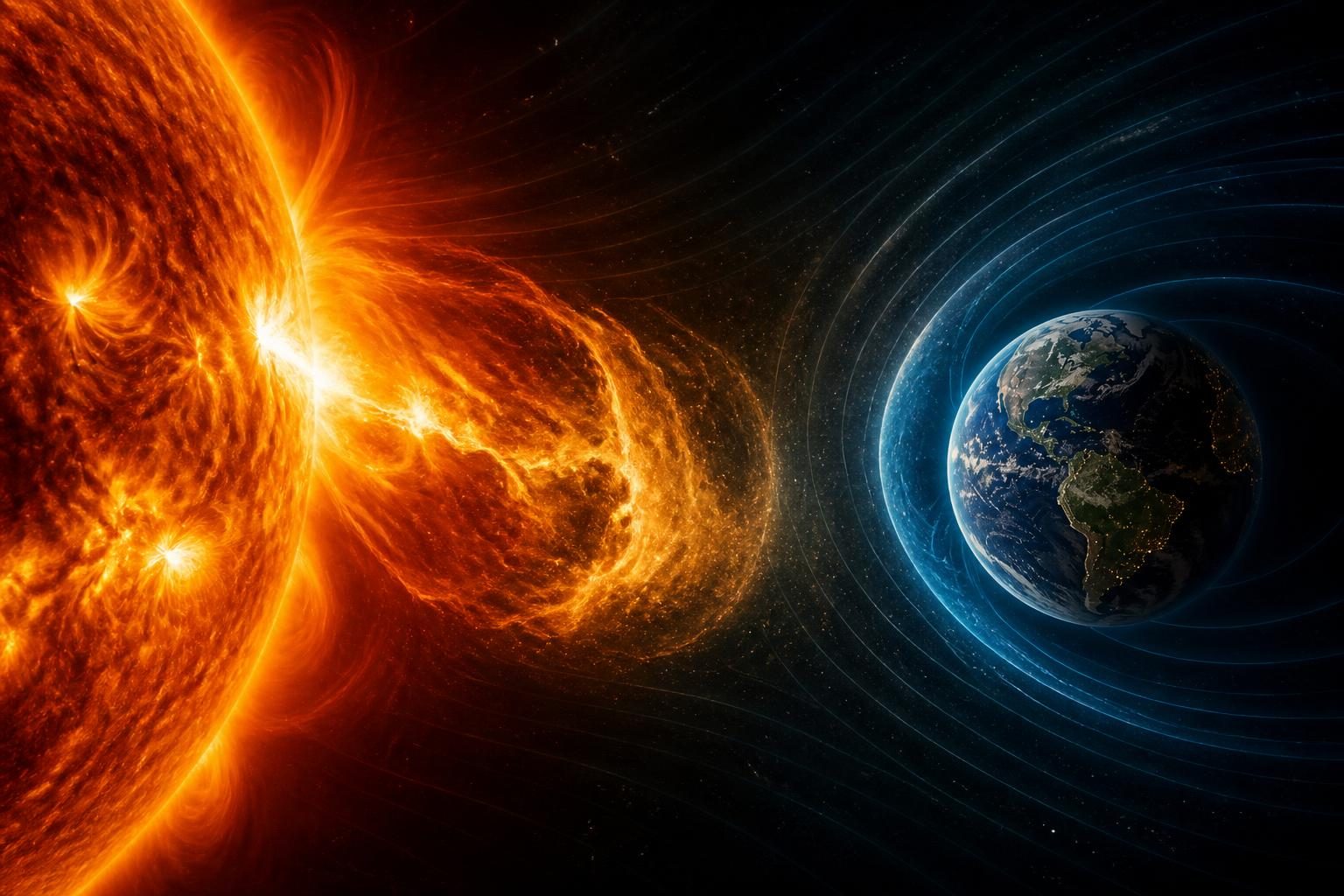
The flare itself produced a short-lived radio blackout risk on the sunlit side of Earth, but the main reason the event is drawing attention is that it was associated with a coronal mass ejection, or CME. A CME is a cloud of magnetized solar plasma that can travel through space and disturb Earth’s magnetic field if it arrives here.
NOAA’s Space Weather Prediction Center said Wednesday, Aug. 26, that CMEs leaving the sun on Aug. 25 are expected to contribute to a possible G2, or moderate, geomagnetic storm on Aug. 28 and Aug. 29. A separate G1, or minor, watch is in effect for Aug. 27 because of a high-speed solar-wind stream from a coronal hole.
Why the solar flare is trending
Search interest rose after space-weather forecasters connected the M6.9 flare with an Earth-directed component of a CME and forecast a chance for enhanced auroras later this week. News reports have highlighted the possibility that the northern lights could become visible farther south than usual, particularly if the incoming solar material interacts strongly with Earth’s magnetic field.
That possibility remains a forecast, not a guarantee. The exact effects of a CME depend on its speed, magnetic orientation and how directly it reaches Earth. Those properties can be difficult to determine until the CME is measured by spacecraft near Earth, often only shortly before its strongest effects begin.
NOAA’s latest update says geomagnetic activity connected with CMEs that departed the sun on Aug. 25 could extend into Aug. 29. The agency has not described the event as an extreme or historic solar storm.
What happened on Aug. 25
NOAA’s daily space-weather discussion reported that the M6.9 flare peaked at 10:02 UTC on Aug. 25, or 6:02 a.m. Eastern time. The flare originated in active Region 4513, a complex sunspot group near the center of the sun’s visible disk.
The event was accompanied by several signals that indicated a CME had likely been launched. These included a Type II radio sweep, which can be associated with a shock wave moving through the solar atmosphere, and an eruption later observed in coronagraph imagery from spacecraft that monitor the sun’s outer atmosphere.
NOAA’s Aug. 26 forecast discussion identified two CMEs associated with activity on Aug. 25 that have Earth-directed components. Forecasters anticipated that they could affect near-Earth space on Aug. 28, while noting that additional imagery and analysis were needed to better assess their paths and potential impact.
The flare was one of several M-class flares produced by Region 4513 during the period. Solar activity was expected to remain at minor-to-moderate levels through Aug. 28, with a smaller chance of a stronger R3-level radio-blackout event.
What “M6.9” means
Solar flares are ranked according to the strength of their X-rays, as measured by satellites in geostationary orbit. The categories are A, B, C, M and X, with each letter representing a tenfold increase in peak intensity.
- A- and B-class flares: Very small events with little effect on Earth.
- C-class flares: Generally minor events.
- M-class flares: Moderate flares that can cause limited radio disruptions, especially on the sunlit side of Earth.
- X-class flares: The strongest category, capable of producing more significant radio blackouts and other space-weather effects.
The number following the letter provides more detail within that category. An M6.9 flare is stronger than an M1 flare but weaker than an X1 flare. The classification describes the flare’s radiation output; it does not by itself determine whether a CME was launched or whether Earth will experience a geomagnetic storm.
What a CME can do at Earth
A geomagnetic storm occurs when disturbances in the solar wind interact with Earth’s magnetic field and upper atmosphere. The strongest effects are produced when the magnetic field carried by the solar material is oriented in a way that allows efficient transfer of energy into Earth’s magnetosphere.
NOAA uses a five-level G scale for geomagnetic storms:
- G1, minor: Possible weak grid fluctuations, minor satellite effects and auroras at high latitudes.
- G2, moderate: Possible voltage alarms in high-latitude power systems, increased satellite-drag concerns and auroras that may be visible as far south as parts of the northern United States under favorable conditions.
- G3, strong: More noticeable effects on satellite operations, radio navigation and power systems.
- G4 and G5: Severe to extreme storms with the potential for broader impacts on power grids, satellite systems, navigation and communications.
The current watch is for G2 conditions, not G4 or G5 conditions. A G2 storm can affect some high-latitude systems, but most people on the ground should not expect direct health effects or widespread disruption from a forecast at this level.
Could the northern lights be visible in the U.S.?
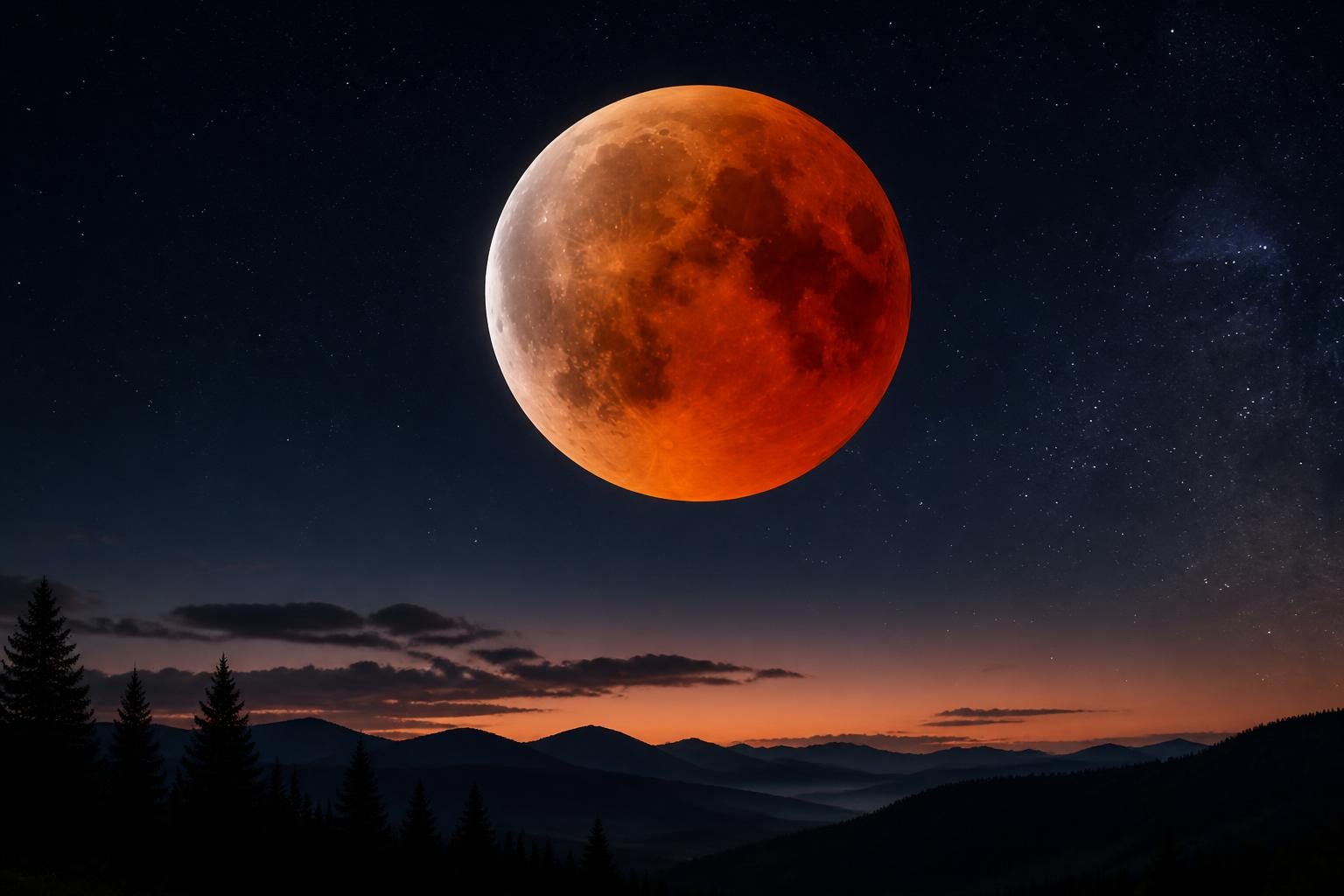
A G2 storm can improve aurora viewing opportunities across parts of the northern United States, especially under dark, clear skies away from city lights. NOAA’s general guidance lists locations around the geomagnetic latitude of New York and Idaho as possible viewing areas during a G2 event, though actual visibility varies widely.
That does not mean the aurora will be visible from every location in those states. Cloud cover, local light pollution, the timing of the storm and the CME’s magnetic orientation all matter. The best viewing window, if conditions develop as forecast, would generally be during nighttime hours when the sky is dark. Aurora activity can also shift rapidly, so a quiet forecast period does not rule out a later display, and a watch does not guarantee one.
People interested in viewing should check NOAA’s aurora forecasts and local weather conditions before heading outside. Cameras and phones may capture colors that are difficult to see with the unaided eye, particularly when the aurora is faint.
What people should—and should not—expect
For most people in the United States, the practical effects of a G2 geomagnetic storm are likely to be limited. The forecast is not a warning that household electricity, cellular service or internet access will fail. It also is not a reason for people on the ground to take special health precautions.
Space weather can matter more for systems that operate in or depend on near-Earth space. Possible concerns include satellite operations, high-frequency radio communication, navigation signals and power-grid management at high latitudes. Airlines and spacecraft operators monitor space-weather conditions because radiation and communications conditions can affect certain routes or missions, but NOAA’s current public watch does not indicate a broad danger to ordinary air travelers.
NOAA’s space-weather scale describes possible effects, not certain outcomes. A storm may remain below the forecast level, reach the forecast level briefly, or become stronger if the incoming magnetic field is oriented in a more disruptive direction than expected.
What happens next
Forecasters will continue tracking the CMEs as more observations become available. NOAA expects mostly quiet geomagnetic conditions through about midday Aug. 27, followed by unsettled to active conditions as a high-speed solar-wind stream arrives. The anticipated CME effects are expected around Aug. 28, with the possibility of G2 storm levels continuing into Aug. 29.
Space-weather forecasts are updated as measurements improve. The most useful information will come from solar-wind monitors positioned upstream from Earth, which can provide a short-term indication of the magnetic field and density of incoming solar material.
For readers, the key takeaway is straightforward: the Aug. 25 M6.9 flare was a real and well-documented solar event, and associated CMEs are being monitored for possible moderate geomagnetic storm conditions later this week. The main public-facing effect could be better northern-lights viewing opportunities in parts of the United States, while any effects on technology or infrastructure are expected to be limited and dependent on the storm’s actual strength and magnetic orientation.
Sources and definitions
NOAA’s latest geomagnetic-storm update says watches are in effect for Aug. 27-29. Its earlier Aug. 27-28 watch announcement describes the expected arrival of CMEs that left the sun on Aug. 25. NOAA’s daily forecast discussion provides the flare’s peak time, active-region information and CME analysis.