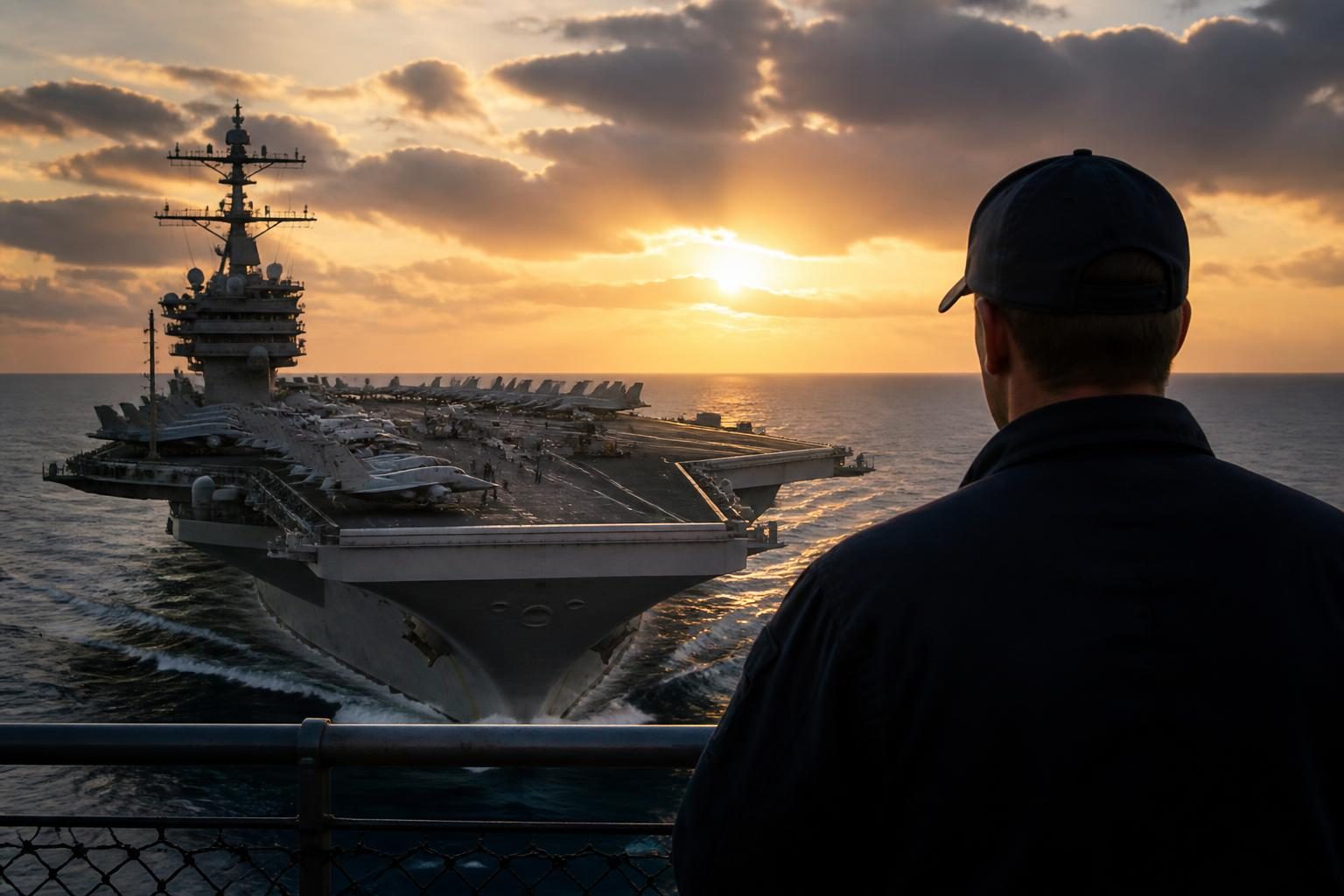
The USS Abraham Lincoln is drawing national attention after one of the longest uninterrupted deployments reported for a modern U.S. aircraft carrier. The San Diego-based carrier left the Middle East after nearly seven months in the region and, as of August 22, 2026, was operating in the Indian Ocean with its escorts and embarked Carrier Air Wing 9, according to USNI News.
The carrier’s prolonged mission has also triggered public concern from sailors’ families and calls from lawmakers for investigations into reported food and water shortages, plumbing problems, exhaustion and mental-health crises. The Navy and senior Pentagon officials have disputed or downplayed some descriptions of conditions aboard the ship, leaving several important questions unresolved.
Why the USS Abraham Lincoln is trending
Interest in the Abraham Lincoln rose sharply in August after reports described the strain of an extended deployment and limited access to port facilities. The carrier departed San Diego on November 21 or November 25, 2025, depending on the account and the specific measure used, for what was initially described as a Pacific deployment. It was later redirected to the Middle East as U.S. military operations expanded in the region.
By August 2026, the carrier strike group had been deployed for more than 270 days. USNI News reported that the strike group had spent more than 200 consecutive days without a declared port call, while Senate Democrats described the period as the longest continuous deployment at sea for a U.S. aircraft carrier in the modern era.
The situation became a political issue after military families spoke publicly about conditions they said their relatives described aboard ship. Reports included shortages of food and hygiene supplies, contaminated or unreliable water, broken toilets and other maintenance problems. Some families also reported serious mental-health concerns, including accounts of sailors attempting to go overboard. Those accounts have not all been independently confirmed in public Navy records.
President Donald Trump and Defense Secretary Pete Hegseth rejected or minimized the broader portrayal of a crisis aboard the carrier. Hegseth said reports had misrepresented the situation, while Trump called concerns about the ship “fake,” according to The Associated Press.
What is confirmed about the carrier’s deployment
The USS Abraham Lincoln (CVN-72) is a nuclear-powered Nimitz-class aircraft carrier based at Naval Air Station North Island in the San Diego area. It operates as the centerpiece of a carrier strike group, which typically includes the carrier, a carrier air wing, guided-missile cruisers or destroyers, and support vessels.
The carrier left the Middle East in August 2026 after supporting U.S. operations in the region. USNI News reported on August 22 that the Lincoln, its escorts and Carrier Air Wing 9 were operating in the Indian Ocean under U.S. 7th Fleet authority. The Navy had not publicly disclosed the carrier’s exact position or a final arrival date in San Diego.
A Navy official told USNI News that the carrier strike group had been deployed for 274 days as of August 22. The ship’s last publicly identified port visit was in Guam on December 11, 2025. It is possible that the strike group made other stops that were not publicly announced, but that remains unclear from available reporting.
The carrier’s relief is part of the explanation for its movement out of the Middle East. The Japan-based USS George Washington arrived in the region, according to The Associated Press, taking over the carrier presence as the Lincoln began its return movement. The Navy’s broader force posture and the timing of the carrier’s eventual homecoming remain subject to operational security and could change.
What families and lawmakers are asking
Families have asked the Navy and Defense Department to explain how the deployment was extended, what support was provided to sailors, and whether officials responded adequately to reports of deteriorating conditions.
At a family meeting reported by Stars and Stripes and other outlets, relatives described concerns about fatigue, morale, communication and access to basic supplies. Some families said sailors had been operating for months under intense workloads while separated from home and uncertain about when they would return.
Senate Democrats sent a letter to Hegseth on August 15 seeking answers about reported shortages, plumbing failures and mental-health emergencies. The lawmakers asked for accountability regarding the length of the deployment and the decisions that kept the carrier at sea for so long.
Members of Congress from California, including senators representing the San Diego area, separately called for an independent review by the Defense Department inspector general. Their request focused on the process and rationale behind the extended deployment of the Lincoln and Carrier Strike Group 3.
These requests are not the same as a completed investigation. They show that lawmakers have sought formal answers, but they do not establish that every allegation is accurate or that officials have reached final findings.
What remains uncertain
The full condition of the crew
Public reporting has documented allegations from family members and some sailors, but the Navy has not publicly released a comprehensive assessment of crew morale, medical incidents, food inventories, water quality or shipboard maintenance covering the entire deployment.
Accounts of food shortages and infrastructure problems vary in detail. A report by NBC Los Angeles quoted a family member who said a sailor had described severely limited meals at one point. Other reports cited shortages of hygiene products and problems with plumbing or water. These statements are serious, but they are individual accounts rather than a publicly verified accounting of conditions for all roughly 5,000 sailors and Marines aboard the carrier.
Reports of sailors going overboard
Several outlets have reported that sailors attempted to go overboard or that at least one such incident prompted a Navy investigation. The circumstances, number of incidents, medical findings and official conclusions have not been fully disclosed publicly.
Going overboard can refer to an accidental fall, a deliberate attempt to leave the ship or another emergency. Without an official investigative report, it is not possible to responsibly characterize every reported incident as a suicide attempt or to determine whether the events had a single cause.
When the ship will arrive home
The carrier is heading back toward the United States, but a precise public arrival date was not established in the reporting available as of August 24, 2026. The journey from the Indian Ocean to San Diego can take weeks, and the ship may make operational or maintenance stops that are not announced in advance.
Why long carrier deployments matter
Aircraft carriers are designed for extended operations, but a deployment is more than a ship remaining at sea. Thousands of sailors and Marines must sustain flight operations, watch rotations, maintenance, medical care, food service, aircraft repair and security around the clock.
Port visits provide opportunities to replenish supplies, conduct maintenance, address medical needs and give crews limited time away from the ship. When a carrier remains at sea for months without a declared port call, those functions become harder to manage. Fatigue can also accumulate when personnel work demanding schedules with limited rest and few opportunities to reset.
For families, extended deployments create separate pressures. Communication may be restricted or intermittent, and relatives may have little information about a ship’s location or return schedule. That can make it difficult to distinguish routine operational secrecy from a genuine emergency, particularly when family members hear reports of illness, shortages or accidents.
The carrier’s mission also illustrates the tradeoff between military readiness and personnel sustainability. Keeping a carrier on station can support ongoing operations, but extending a deployment may affect crew well-being, equipment maintenance and the timing of future training or maintenance periods. Those effects are among the issues a formal review could examine.
What happens next
The immediate next step is the Abraham Lincoln’s transit out of the Indian Ocean and eventual return to its San Diego home port. The Navy is expected to manage the movement, provide support to the crew and determine what maintenance and recovery work the ship requires after the deployment.
Congressional inquiries and any inspector-general review could provide a more complete account of how the deployment was extended and how complaints were handled. Such reviews typically take time and may include information that cannot be released publicly for privacy, medical or operational-security reasons.
Until official findings are released, the most accurate summary is limited but significant: the USS Abraham Lincoln completed an unusually long operational deployment, left the Middle East in August 2026, and became the subject of credible public concern from families and lawmakers about crew welfare. The existence and scope of individual reported problems—and whether they reflect systemic failures—remain matters for formal investigation.
Essential background on the USS Abraham Lincoln
- Designation: CVN-72, a nuclear-powered Nimitz-class aircraft carrier.
- Home port: Naval Air Station North Island in the San Diego area.
- Role: Flagship of a carrier strike group and operating base for a carrier air wing.
- Current status as of August 24, 2026: Public reporting placed the carrier in the Indian Ocean after leaving the Middle East and beginning its return movement.
- Personnel: Approximately 5,000 sailors and Marines are associated with the carrier and its embarked air wing, according to news reports.
Bottom line: The USS Abraham Lincoln is trending because its extended deployment has combined a major regional military role with unresolved questions about crew conditions. The ship is no longer reported to be in the Middle East, but the public record has not yet established a final account of what happened aboard or when the carrier will reach San Diego.