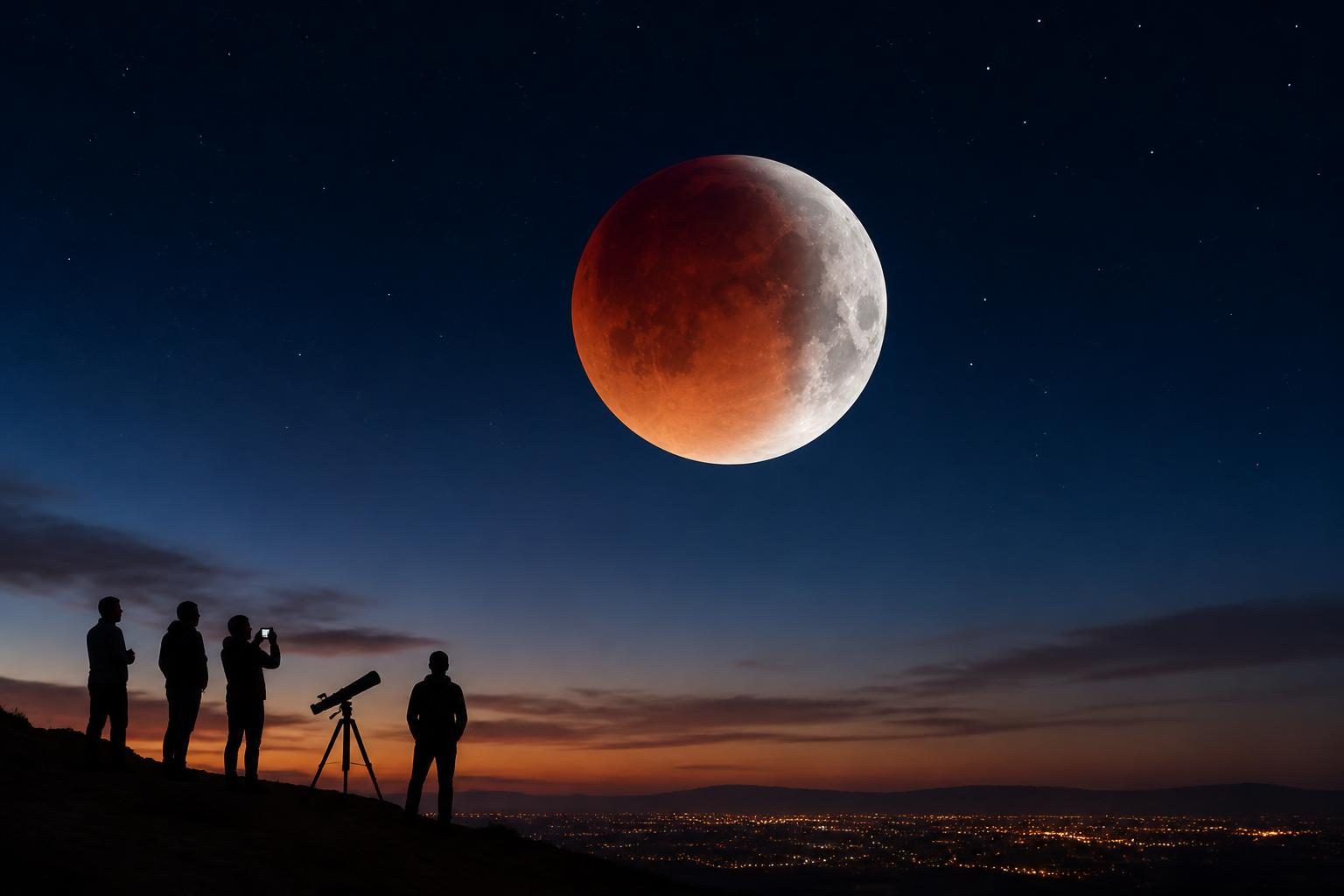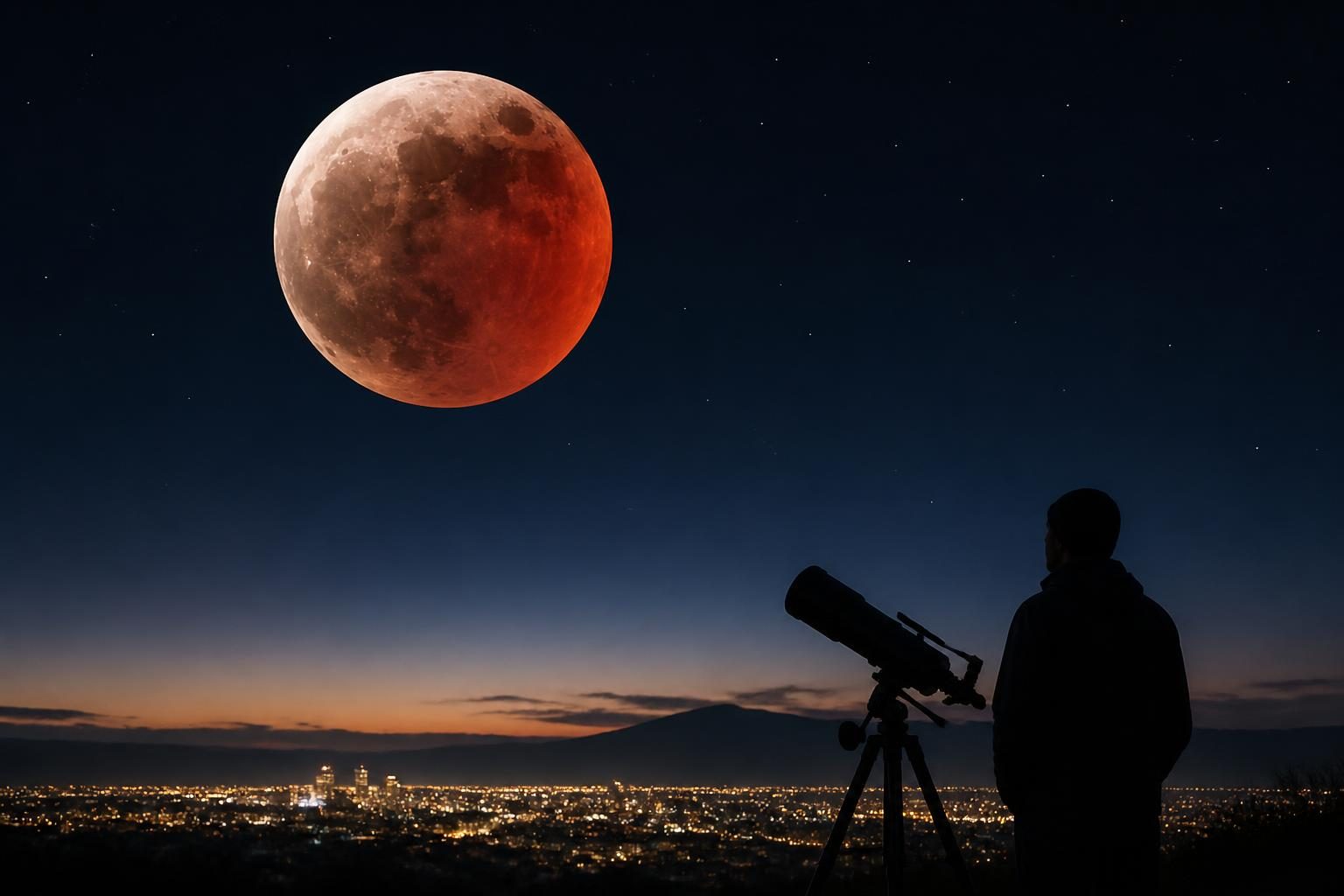
A deep partial lunar eclipse will cross the night sky over much of the United States late Thursday, Aug. 27, and early Friday, Aug. 28, 2026. The event is drawing attention because nearly all of the Moon’s disk—about 96% at maximum eclipse—will pass through Earth’s darkest central shadow, known as the umbra.
NASA lists the eclipse as visible from the Americas, Europe and Africa, with the best views in the United States generally occurring during the late evening or around midnight, depending on location. The eclipse does not require special eye protection: Unlike a solar eclipse, a lunar eclipse is safe to view with the unaided eye. ([science.nasa.gov](https://science.nasa.gov/moon/eclipses/?utm_source=openai))
Why lunar eclipses are trending now
The immediate reason for the renewed interest is timing. The eclipse is less than two days away as of Wednesday, Aug. 26, and it follows a total solar eclipse that occurred on Aug. 12. That combination has made August an unusually active month for skywatchers, with eclipses on both sides of the calendar.
The Aug. 27–28 event is also visually close to totality. It is officially a partial lunar eclipse because a small portion of the Moon will remain outside the umbra. But at maximum eclipse, only a narrow bright section is expected to remain outside the darkest part of Earth’s shadow. NASA’s visualization team describes it as a “deep partial” eclipse, with 96.3% of the Moon’s disk inside the umbra at greatest eclipse. ([svs.gsfc.nasa.gov](https://svs.gsfc.nasa.gov/5672?utm_source=openai))
The term “blood moon” may appear in social media posts and headlines. It is an informal expression, not a separate scientific type of eclipse. A partially or totally eclipsed Moon can take on an orange, copper or reddish hue because sunlight passing through Earth’s atmosphere is filtered toward longer red and orange wavelengths before reaching the Moon. The exact color depends partly on atmospheric conditions, including dust and clouds, so the appearance cannot be predicted precisely in advance. ([science.nasa.gov](https://science.nasa.gov/moon/eclipses/?utm_source=openai))
When to watch in the United States
The eclipse begins with a subtle penumbral phase, when the Moon enters the faint outer portion of Earth’s shadow. That stage is often difficult to notice. The more obvious partial phase begins when the Moon starts entering the umbra.
- Partial phase begins: about 10:34 p.m. Eastern time on Thursday, Aug. 27.
- Greatest eclipse: about 12:13 a.m. Eastern time on Friday, Aug. 28.
- Partial phase ends: about 1:52 a.m. Eastern time on Friday, Aug. 28.
Those are nationwide reference times expressed in Eastern time. The local date and the portion of the event visible will vary by time zone and by whether the Moon is above the horizon at a particular location. NASA identifies the peak at approximately 4:13 a.m. Coordinated Universal Time, or UTC. Timeanddate’s location tables provide city- and state-specific circumstances, including moonrise and moonset. ([timeanddate.com](https://www.timeanddate.com/eclipse/lunar/2026-august-28?utm_source=openai))
For much of the Eastern and Central time zones, the Moon should be well placed for the main part of the eclipse. In the Mountain and Pacific time zones, the event occurs earlier in the evening by the clock. Exact visibility can still be affected by local geography, buildings, trees, clouds and the Moon’s elevation above the horizon.
What about Alaska and Hawaii?
Visibility is not uniform across the country. Parts of Alaska may see only some phases or may have the Moon below the horizon during the most dramatic portion. Hawaii and other Pacific locations also have different circumstances from the contiguous United States. Viewers should check a local astronomy or eclipse timetable rather than relying on a single national time.
What viewers will see
A lunar eclipse happens only at full Moon, when the Sun, Earth and Moon are aligned closely enough for Earth to cast its shadow across the lunar surface. The Moon does not disappear because it stops producing light; it is normally visible because it reflects sunlight, and during an eclipse part of that sunlight is blocked by Earth.
The process unfolds gradually. First, the Moon may appear slightly dimmer as it moves through the penumbra. During the partial phase, a curved shadow will advance across the lunar disk. Near maximum eclipse, most of the Moon will be within the umbra, while a thin section remains brightly lit. The shadow’s curved edge is a reminder that Earth is round.
The portion inside the umbra may look darker than usual and could appear rusty, orange or red. However, the Moon may not look uniformly red, and some locations may see a more muted brown or gray appearance. Haze, smoke, wildfire pollution and cloud cover can affect the view. These conditions are location-specific and cannot be confirmed until closer to the event.
How to watch the eclipse
No special equipment is necessary. Choose a location with a clear view of the Moon and, if possible, move away from bright outdoor lighting. A reclining chair or blanket can make a long viewing session more comfortable because the Moon may remain in the sky for several hours.
- Check the local forecast and confirm the Moon will be above the horizon.
- Begin watching a little before the partial phase so you can see the shadow develop.
- Use binoculars or a telescope if you have them; they are safe for lunar viewing.
- For photographs, a phone camera can record the Moon, although a tripod or other stable support will help.
- Do not use solar eclipse glasses for the purpose of improving a lunar-eclipse view; they are unnecessary because the Moon is not dangerously bright.
The most noticeable changes will occur during the partial phase, not necessarily at the beginning or end of the penumbral stage. Observers should also avoid assuming that a “blood moon” color is guaranteed. The eclipse geometry is predictable, but the Moon’s exact color and the quality of the view depend on atmospheric and local conditions.
Partial versus total lunar eclipses
In a total lunar eclipse, the entire Moon passes into Earth’s umbra. In a partial lunar eclipse, only part of the Moon enters that central shadow. A penumbral lunar eclipse occurs when the Moon passes only through the outer, lighter shadow and may dim so subtly that casual observers do not notice it.
The Aug. 27–28 eclipse is partial despite its depth. The distinction matters because a small part of the Moon will remain outside the umbra at maximum eclipse. The U.S. Naval Observatory and NASA both classify the event as a partial lunar eclipse. ([aa.usno.navy.mil](https://aa.usno.navy.mil/data/UpcomingEclipses?utm_source=openai))
Lunar eclipses are visible from the entire night side of Earth, weather permitting, rather than only from a narrow path. That is one reason they are easier for large numbers of people to observe than total solar eclipses. The Moon must still be above the local horizon, however, and daylight or moonset can limit what a particular community sees.
What happens next
After the August eclipse, the next lunar eclipse listed by NASA is a penumbral eclipse on Feb. 20–21, 2027. Because a penumbral eclipse involves only the faint outer shadow, it is expected to be less visually dramatic. The next total lunar eclipse is scheduled for the transition from Dec. 31, 2028, to Jan. 1, 2029, according to NASA’s long-term eclipse data. ([eclipse.gsfc.nasa.gov](https://eclipse.gsfc.nasa.gov/lunar.html?utm_source=openai))
For now, the practical advice is straightforward: Find the local timing, check the weather, and look up during the main partial phase Thursday night or early Friday morning. The event is safe to observe, widely visible across the Americas and scientifically predictable, even though the Moon’s final color will depend on the atmosphere above each viewer.