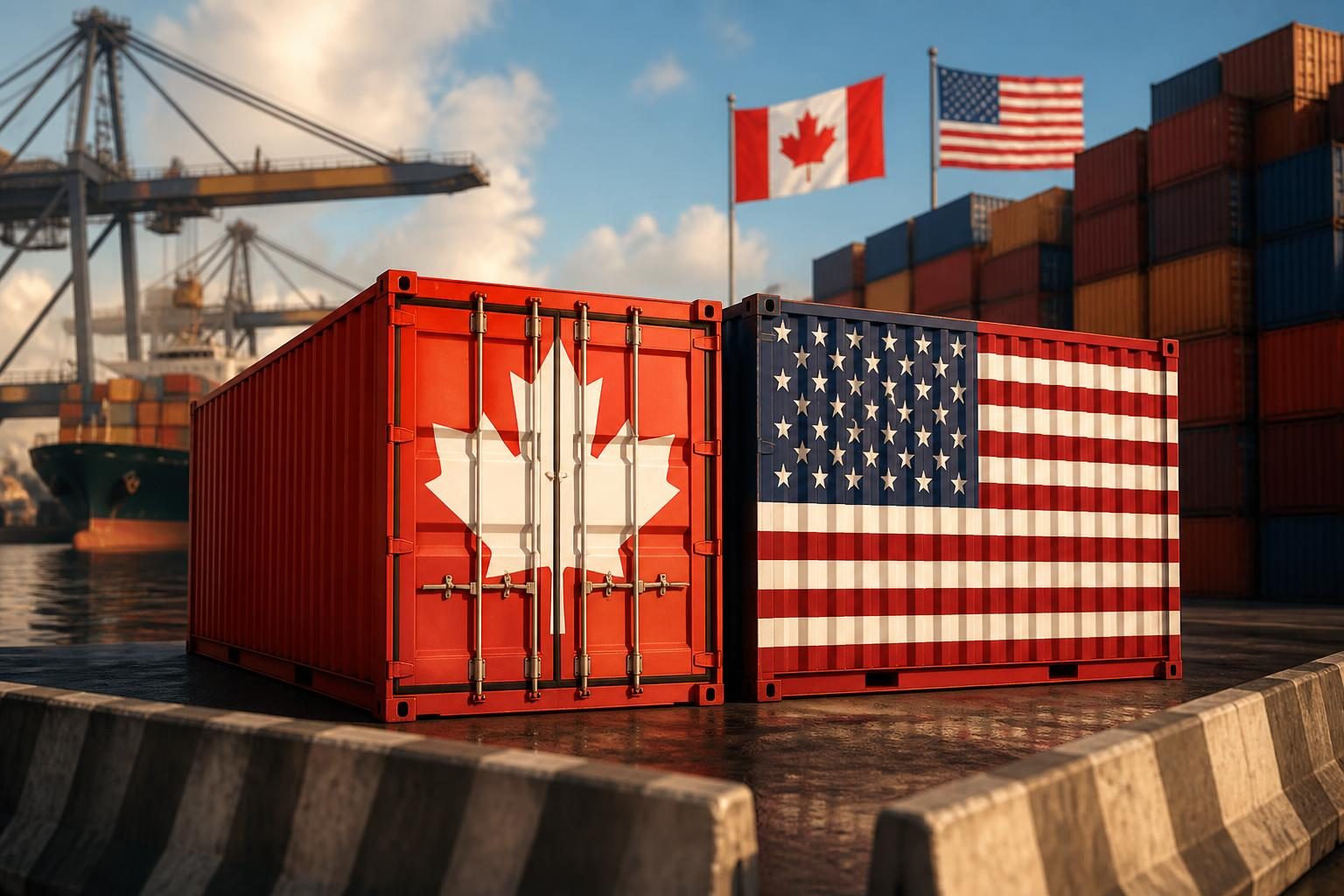
Canada will begin imposing new retaliatory tariffs on selected U.S. goods on Sept. 8, escalating a trade dispute that has intensified since the United States placed 50% tariffs on certain Canadian products.
Canada’s Department of Finance said Aug. 25 that the counter-tariffs will apply to about $27.6 billion in U.S. imports. The measures will carry rates of 15%, 25% or 50%, depending on the product, and are designed to match the corresponding U.S. tariff rates.
The announcement is driving renewed attention because the tariffs are not merely a political threat: Canada has published a start date, identified major affected sectors and begun briefing Canadian businesses and labor groups. At the same time, the duties have not yet taken effect, leaving a short window for further negotiations or possible changes.
What Canada has announced
Canada’s new countermeasures are aimed at goods affected by the latest U.S. actions. The Canadian government says the list includes products in sectors such as steel, dairy, appliances, agricultural equipment, pulp and paper, and electronics.
The tariffs will be applied at different rates:
- 50%: Certain steel and aluminum products, furniture, and clothing and apparel.
- 25%: Appliances, dairy products such as cheese, and certain steel and aluminum derivative products.
- 15%: Other products covered by the U.S. measures, where Canada is matching a 15% U.S. rate.
Canada says the measures cover roughly $27.6 billion in imports from the United States. The exact effect on individual products will depend on tariff classifications, country-of-origin rules and whether a particular item is included in the final customs schedule.
Canada also said that earlier counter-tariffs, including those affecting autos, remain in place. Its tariff-remission framework, which can provide exceptional relief in some circumstances, also remains available.
Why the dispute escalated
The immediate trigger was a U.S. decision to impose additional 50% tariffs on nearly $20 billion of Canadian imports under Section 338 of the Tariff Act of 1930. The U.S. Trade Representative’s office said the action was intended to respond to what the administration described as discriminatory treatment of U.S. exports to Canada.
The U.S. action focused on Canadian goods connected to motor vehicles, alcoholic beverages and dairy. The administration said Canada had restricted or disadvantaged U.S. products in those sectors.
Canada disputes that characterization and says the new U.S. tariffs are unjustified. The Canadian government said negotiations had been suspended after Washington presented terms Ottawa considered unacceptable. Canada’s stated position is that it would not accept an agreement that it believes harms Canadian workers, businesses or strategic sectors.
The U.S. tariffs took effect Aug. 22, according to Canada’s Finance Department. Canada announced its response three days later, saying it would match the new U.S. tariffs “dollar for dollar, rate for rate.”
What “retaliatory tariff” means
A retaliatory tariff is an import tax imposed in response to another country’s trade measure. It is collected from importers when covered goods enter the country. Importers may absorb the added cost, seek lower prices from suppliers or pass some or all of the cost to wholesalers, retailers and consumers.
That means a tariff is not normally a direct charge to a foreign government. In practice, it can affect companies and shoppers on both sides of the border, depending on how businesses adjust their prices and supply chains.
Canada’s announcement is described as targeted because it does not apply one rate to every U.S. product. Instead, it focuses on categories connected to the U.S. tariffs and on industries Canada says are particularly exposed to competition from U.S. goods.
What is happening now
Canada’s government is preparing businesses and workers for the effect of the new duties. On Aug. 26, Canadian Finance Department officials briefed industry and labor representatives about the counter-tariffs and existing support programs.
The government also announced a new and expanded support package worth $7.5 billion. According to the Finance Department, the package includes:
- $1.5 billion in additional support through regional development agencies, including liquidity assistance for small and medium-sized businesses.
- A new $500 million liquidity stream through the Business Development Bank of Canada’s Pivot to Grow program.
- $2 billion for a Canada Strong Diversification Fund to support projects by tariff-affected businesses.
- $3.5 billion in rapid-response support for workers and employers, including temporary employment-insurance flexibility, training and a worker-retention and retraining program.
Canada says these programs build on nearly $25 billion in support that had already been provided since the broader tariff conflict began.
What it could mean for U.S. businesses and consumers
U.S. exporters in the affected sectors could face higher costs when selling into Canada after Sept. 8. The industries most clearly identified by Canada include steel and aluminum, dairy, household appliances, agricultural equipment, furniture, clothing, paper products and electronics.
The effects will vary. A U.S. company that sells a covered product directly to Canadian buyers may face an immediate increase in landed costs. Other companies may be able to shift sourcing, renegotiate contracts or sell through existing inventory before the tariff takes effect.
For U.S. consumers, the most direct effects would generally be felt if businesses pass along higher import-related costs. However, it is too early to say how much prices will change, because companies may absorb part of the expense or find alternative suppliers.
The trade relationship is unusually integrated. Goods and components often cross the border multiple times before reaching a final customer. As a result, tariffs can affect manufacturers even when the final product is assembled in only one country.
What it could mean for Canada
Canadian businesses that rely on U.S. markets are already dealing with uncertainty from the American tariffs. Canada’s new duties may offer some protection to domestic producers by making affected U.S. goods more expensive in Canada, but they also risk raising costs for Canadian companies that use those imports as inputs.
The balance will differ by industry. A Canadian steel producer could benefit from reduced competition from tariffed U.S. steel, while a Canadian manufacturer that purchases U.S. equipment or components could face higher operating costs.
Canada’s government says its support programs are intended to help firms manage cash-flow pressures, preserve jobs and diversify beyond the U.S. market. Canadian Prime Minister Mark Carney has also emphasized reducing the country’s dependence on the United States over time, although building new export markets generally takes years rather than weeks.
What happens next
The key near-term date is Sept. 8, 2026, when Canada says the new counter-tariffs are scheduled to begin. Until then, businesses must prepare for the announced rules while governments retain the possibility of returning to negotiations.
Canada has not said that the tariffs are permanent. Its Finance Department said officials would continue assessing the economic effects and could adjust support programs or policies as conditions change.
The United States has also threatened additional action, including possible tariffs affecting Canada’s auto sector. The U.S. Trade Representative’s office said the Section 338 measures on Canadian imports could reach 50% and were imposed under a rarely used provision of federal trade law. The legal and economic consequences of those measures remain subjects of continuing debate.
For now, the central uncertainty is whether the two governments can restart talks before the Canadian tariffs take effect. The announced start date creates a formal deadline, but there is no confirmed agreement to resolve the dispute as of Aug. 27.
The bottom line
Canada has moved from warning about retaliation to setting a timetable. Beginning Sept. 8, Ottawa says it will impose 15%, 25% and 50% tariffs on about $27.6 billion in U.S. goods, targeting products in sectors affected by the latest U.S. measures.
The tariffs are intended to shield Canadian producers and pressure Washington, but they may also increase costs for businesses that depend on cross-border trade. The next major developments will be the release and implementation of the detailed customs rules, any U.S. response and whether negotiations resume before the deadline.
Readers should distinguish between tariffs that are already in force and tariffs that have merely been announced. The latest Canadian countermeasures are scheduled—not yet effective—as of Thursday, Aug. 27, 2026.