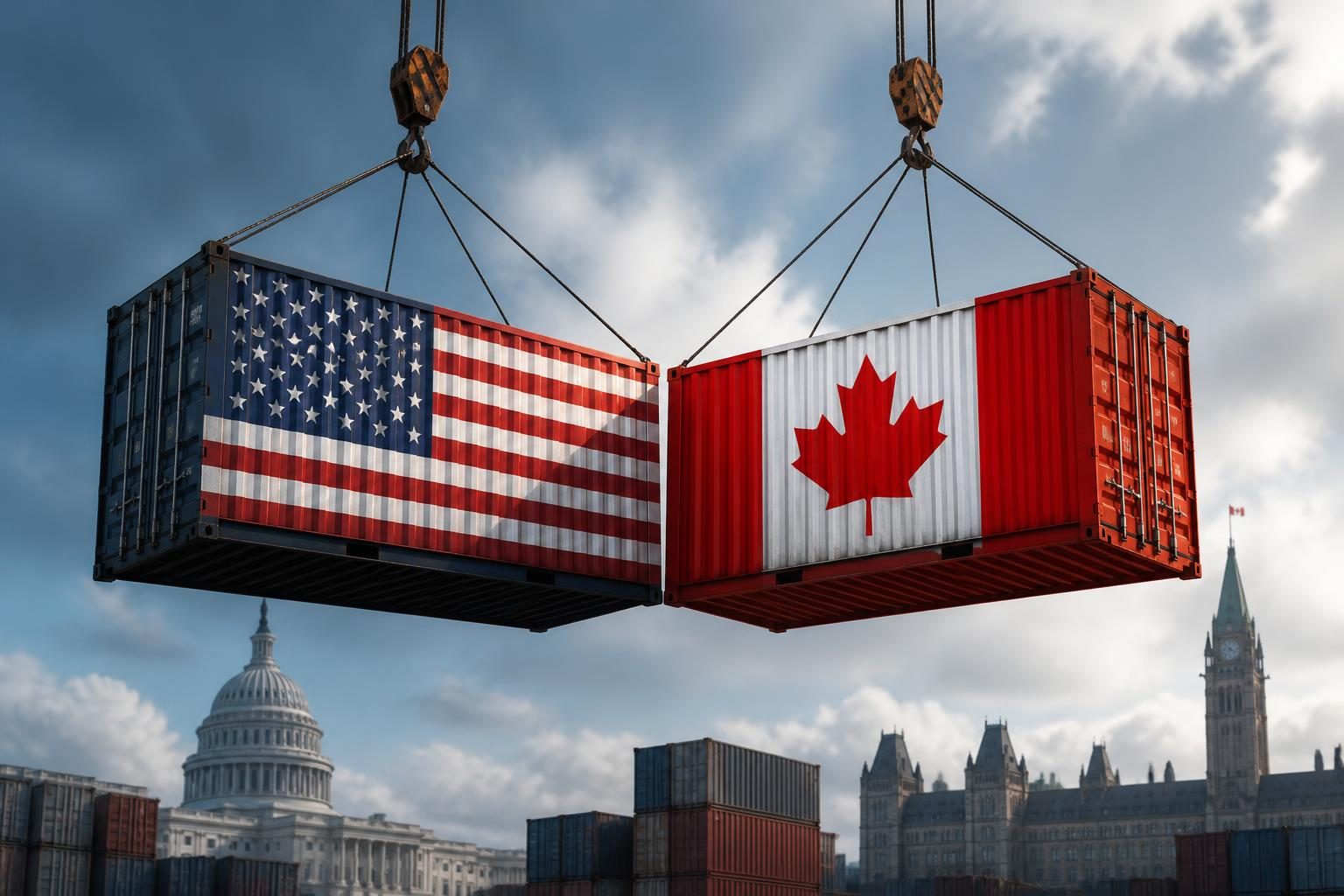
Canada announced new retaliatory tariffs on U.S. goods Tuesday, August 25, escalating a trade dispute with its largest trading partner after the United States imposed 50% tariffs on roughly $27.6 billion of Canadian products.
The Canadian measures will cover about 700 U.S. products and take effect at 12:01 a.m. on September 8, according to Canada’s Department of Finance. The tariffs will be set at 15%, 25% or 50%, generally matching the U.S. rate applied to comparable Canadian goods.
The announcement is the latest turn in a rapidly deteriorating relationship between Washington and Ottawa. Trade negotiations were suspended after the two governments failed to reach an agreement, and both sides are now preparing businesses and workers for a prolonged period of uncertainty.
What Canada announced
Canada said its counter-tariffs will apply to goods worth C$27.6 billion, or about US$20 billion, imported from the United States. The targeted products include goods from several politically and economically important sectors:
- Steel and aluminum products
- Dairy products
- Appliances and electronics
- Farm and agricultural equipment
- Furniture and apparel
- Pulp and paper products
The full list is organized by Canadian tariff classifications, which means individual products may be covered even when a broad category is not. Canada’s government said the measures apply to goods originating in the United States, rather than simply goods shipped through the country.
U.S. products already in transit to Canada when the new measures take effect will not be subject to the counter-tariffs, according to the Canadian government’s backgrounder.
Why the dispute escalated
The immediate trigger was the U.S. decision to impose a new 50% tariff on a range of Canadian goods effective August 22. The White House has defended the tariffs as a response to what it calls discriminatory or unequal treatment of U.S. exports by Canada, including disputes involving alcohol, dairy products and automobiles.
Canada rejected that rationale and said Washington’s demands went beyond what Ottawa could accept. In statements over the past week, Prime Minister Mark Carney’s government said it was seeking a trade agreement that would provide certainty for businesses while respecting Canadian sovereignty and protecting domestic industries.
The governments had been negotiating intensively in recent weeks. Those talks broke down late last week, and Canada said it would match the new U.S. tariffs dollar for dollar. The retaliatory package announced Tuesday formalizes that response.
Both governments have also used separate tariff authorities and different product lists. That makes the dispute more complicated than a single across-the-board tax: the rate can depend on the product, its country of origin, and which U.S. or Canadian measure applies.
How tariffs affect trade
A tariff is a tax collected on imported goods. The importer generally pays the duty to the government at the border. Companies may then absorb the added cost, raise prices, change suppliers or reduce orders.
That does not mean every tariff produces an immediate one-for-one increase in retail prices. The effect depends on competition, inventories, contracts, currency movements and whether businesses can find alternative suppliers. Some costs may be passed along to consumers; others may reduce profit margins or slow investment.
Because the United States and Canada have deeply integrated supply chains, a product can cross the border multiple times before reaching a customer. This is particularly important in manufacturing, agriculture, energy-related industries and transportation equipment. A tariff on an input can raise costs for a business that later sells a finished product in either country.
For U.S. exporters, the Canadian duties could make affected products more expensive for Canadian buyers. That may reduce demand, encourage Canadian firms to source from other countries or lead companies to seek exemptions. The impact will vary widely by product and business.
What it could mean for Americans
The new Canadian tariffs are aimed at U.S. exports, not directly at products sold inside the United States. Their first effect will be felt by American companies that sell the covered goods in Canada.
Some exporters may be able to absorb part of the cost or renegotiate contracts. Others could face lower sales, delayed shipments or pressure to reduce prices. Businesses in border states and industries that rely heavily on Canadian customers may be especially exposed, although the size of the effect will depend on how long the tariffs remain in place.
U.S. consumers could also be affected indirectly. If exporters redirect products to the domestic market, increased supply could put downward pressure on some prices. But if companies raise prices to offset lost margins, cut production or reduce hiring, the broader economic effects could move in the opposite direction.
At this stage, it is too early to determine how much the Canadian measures will change prices for American households. The list of affected products is detailed, and the economic impact will depend on whether Washington and Ottawa reach a new agreement before September 8 or soon afterward.
What it could mean for Canadians
Canadian consumers and businesses are already facing the effects of U.S. tariffs on Canadian goods. Canada’s latest response could raise the cost of imported U.S. products, particularly in categories such as appliances, farm equipment, furniture and some food products.
The Canadian government said it is pairing the tariff response with support for workers and businesses. Officials have described the measures as part of a broader effort to limit damage to industries affected by the trade conflict.
Support programs may cushion some losses, but they do not eliminate the underlying cost of disrupted trade. Companies may still need to find new suppliers, adjust production or absorb higher expenses. Some Canadian businesses may also face weaker demand in the United States because of Washington’s tariffs.
What happens next
The immediate deadline is September 8, when Canada’s new counter-tariffs are scheduled to begin. Before then, customs authorities and importers will need to determine which products are covered and how the rates apply.
The two governments could still change, suspend or expand the measures. Canada’s announcement did not establish how long the tariffs will remain in place. In trade disputes, tariffs can be removed through a negotiated agreement, but they can also remain for months or years if the sides fail to resolve the underlying conflict.
Businesses will be watching for several developments:
- Whether U.S.-Canada negotiations resume
- Whether either government grants product-specific exclusions or tariff relief
- Whether companies change suppliers or shipping routes
- Whether additional tariffs are announced
- Whether the dispute affects the broader North American trade framework
The new measures also add pressure to the broader U.S.-Mexico-Canada trade relationship. The countries’ trade rules were designed to support cross-border commerce, but the current dispute shows that preferential access under a trade agreement does not necessarily prevent governments from imposing additional duties under separate legal authorities.
The bottom line
Canada’s announcement confirms that the latest U.S.-Canada tariff dispute is moving from threats and negotiations into a new phase of reciprocal trade penalties. Canada will match U.S. duties on about C$27.6 billion of American goods beginning September 8, with steel, dairy, appliances, agricultural equipment and other products among the affected categories.
The practical effects will depend on how companies respond and whether the governments return to negotiations. For now, the clearest near-term consequence is greater uncertainty for exporters, importers and consumers in two economies whose supply chains are closely connected.